



Cancer treatments, like chemotherapy and radiation, work by destroying cancer cells. In the process, they can also damage healthy cells, causing side effects. Although everyone’s experience is different, it can be helpful to know the most common cancer treatment side effects and how to manage them.
Advertisement
Cleveland Clinic is a non-profit academic medical center. Advertising on our site helps support our mission. We do not endorse non-Cleveland Clinic products or services. Policy
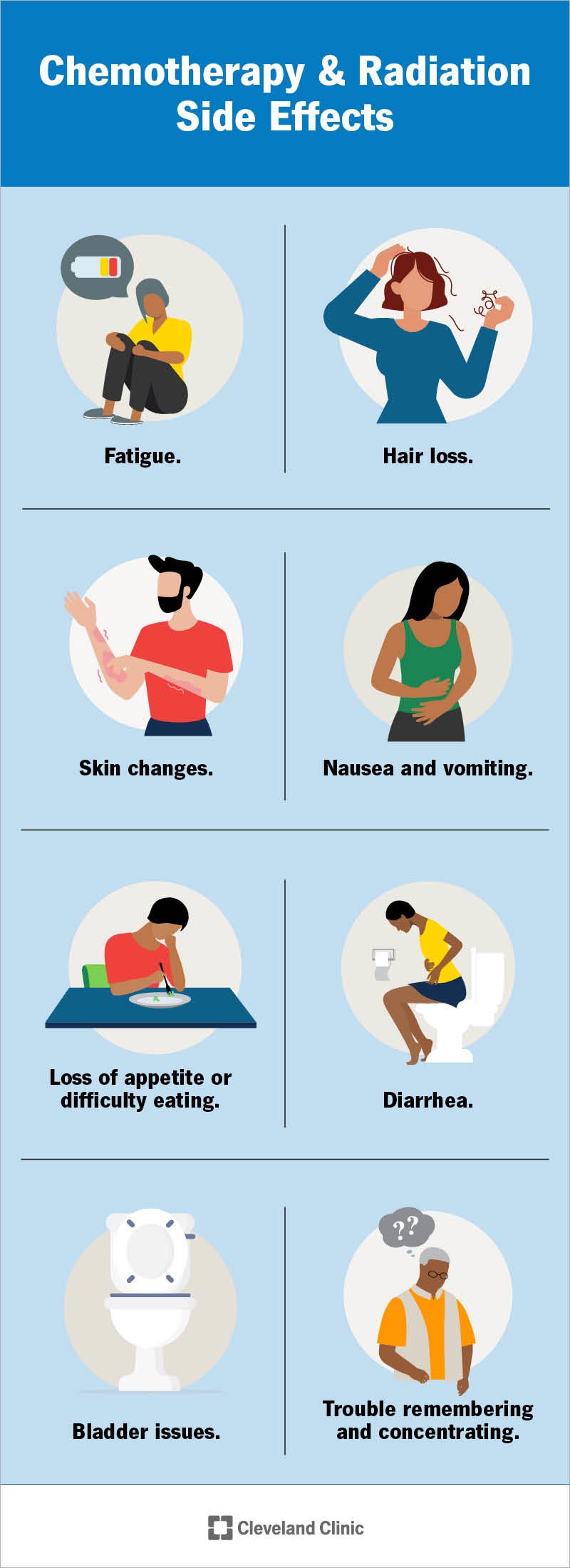
Image content: This image is available to view online.
View image online (https://my.clevelandclinic.org/-/scassets/Images/org/health/articles/10257-chemotherapy-side-effects)
Chemotherapy and radiation therapy fight cancer by destroying cancer cells. Although chemo and radiation are designed to kill cancer cells while sparing healthy tissue, these treatments sometimes damage or destroy normal cells. The harm to normal cells may cause side effects.
Advertisement
Cleveland Clinic is a non-profit academic medical center. Advertising on our site helps support our mission. We do not endorse non-Cleveland Clinic products or services. Policy
The good news is that while damaged cancer cells die, normal cells can repair themselves. Most people receive chemotherapy and radiation spread out over multiple sessions to give normal cells time to repair. Allowing your body adequate recovery time can lessen side effects.
In the meantime, knowing what side effects to expect and how to manage them can empower you to cope with cancer treatments more effectively.
Your experience of chemotherapy and radiation will depend on your overall health and the specific types of chemotherapy drugs or radiation therapy treatment you’re receiving. Whether you’re receiving a combination of treatments also matters.
You may experience some of the following side effects or none at all. Your oncologist — the cancer specialist in charge of your treatment — is your best resource for explaining what side effects to expect, given your health and treatment plan.
Fatigue is the most common side effect of chemotherapy and radiation. During treatment, your body is not only fighting cancer, but it’s also working to repair cell damage from treatment. As a result, you may feel too drained to carry out your usual activities. Fatigue may set in gradually, allowing you time to adjust. It may start suddenly, requiring you to adapt quickly.
Advertisement
Chemotherapy treatments, in particular, can reduce your red blood cell count and lead to anemia. With anemia, you may experience extreme fatigue alongside other symptoms like shortness of breath and a rapid heartbeat (heart palpitations). Contact your healthcare provider immediately if you notice these symptoms.
Hair follicles are sensitive to radiation and chemotherapy. Although you may experience permanent hair loss, hair usually grows back. It usually starts to regrow within two to three months after chemotherapy and three to six months after radiation therapy. Your hair’s texture and color may be different once it grows back.
Advertisement
Chemotherapy and radiation therapy can cause skin irritation, itchiness, dryness, redness and swelling. These treatments can also cause your skin to change color or darken. Radiation therapy may cause skin sores that you need to monitor for infection. These sores (and other skin changes) only appear on body parts receiving radiation. Skin rashes, including hand-foot syndrome, are common during chemotherapy. Chemotherapy may also make you sensitive to sunlight, increasing your risk of sunburn.
Most rashes and other forms of skin irritation improve after treatment but require time for healing.
Advertisement
Both chemotherapy and radiation therapy can cause diarrhea, nausea and vomiting. The type of medicine you’re taking, how it’s administered, the dose and how frequently you’re taking it all influence whether you’ll experience these symptoms. Unless it’s managed, you may lose too much water (dehydration) or other nutrients you need.
Nausea and vomiting related to chemotherapy is called chemotherapy-induced nausea and vomiting (CINV). Chemotherapy can cause you to become temporarily lactose intolerant. If you notice more diarrhea or loose stools with milk or milk products, you may want to decrease or eliminate these foods or drinks until you have regular stools.
You’re more likely to experience nausea and vomiting with radiation therapy directed toward your brain or abdomen. You’re more likely to experience diarrhea and other forms of gastrointestinal upset (gas, cramps, bloating) with radiation directed at your pelvis.
Advertisement
Side effects like nausea, vomiting and diarrhea can make you less inclined to eat. Still, you may lose your appetite or have trouble eating for other reasons.
It’s common during cancer treatment to experience trouble thinking, concentrating or remembering. Usually, people experience issues with short-term memory in particular. Regardless of your treatment, the stress of a cancer diagnosis can make it more challenging to think and concentrate. You may be able to carry out your routine, but it may take longer than it once did.
Treatments can impact your brain function, too. Radiation therapy directed at your head can affect your ability to process information. Chemotherapy brain fog, or “chemo brain,” is common among people receiving chemotherapy treatments. In addition to taking more time to think, remember and carry out tasks, you may have trouble sleeping and lose your appetite. Heightened day-to-day stress can lead to depression, which can worsen symptoms.
Radiation toward your pelvis and some chemotherapy drugs can irritate your bladder, making it hard to pee or empty your bladder. You may notice pain or a burning sensation when you pee, or you may feel the constant urge that you need to go to the bathroom.
It’s crucial to watch for signs of a urinary tract infection (UTI), like pelvic pain, cloudy or bloody urine and a fever. UTIs are always unpleasant, but they can be serious when receiving cancer treatment. Report symptoms to your healthcare provider immediately.
The stress of a cancer diagnosis and treatments can take a toll on your sex life. Factors that impact desire — such as fatigue, hormone changes or changes in your self-image — may also play a role in your ability to have children after cancer treatment.
In women and people assigned female at birth (AFAB):
In men and people assigned male at birth (AMAB):
Side effects often relate to what areas of your body and which body systems treatment will impact most.
Radiation side effects are often site-specific, which means you’re most likely to experience side effects in the parts of your body exposed to X-rays. For example, you’re more likely to notice hair loss or skin changes on the body part receiving the radiation. Fatigue is common regardless of the body parts receiving treatment.
Brain
Head and neck
Breast
Abdomen
Pelvis
Chemotherapy targets fast-growing cells in your body. This includes cancer cells, but other cells that tend to grow rapidly can be affected, too. Symptoms often depend on the type of cells affected.
Skin cells
Hair follicle cells
Blood-forming cells in your bone marrow (red blood cells, white blood cells and platelets)
You may experience side effects within a few hours of treatment — as is the case with certain chemotherapy treatments — that gradually begin to improve. Or you may not experience side effects until you’ve completed several treatment sessions, as is sometimes the case with radiation. Talk to your healthcare provider about when you’re most likely to experience side effects based on your treatment type and schedule.
Most side effects go away within a few months after you finish treatment. Still, some side effects don’t start until months or years after treatment. In some cases, side effects can be permanent. Ask your oncologist about what to expect. Ask them to connect you to palliative care resources to help manage cancer symptoms and treatment side effects.
Every person’s cancer treatment experience is unique. Some common side effects might not affect you, or you may have a side effect not listed here. Your healthcare provider can inform you of signs and symptoms you should look for. Still, only you know how you feel. Let your oncologist and palliative care team know what you’re experiencing. They can recommend ways to manage side effects. Your oncologist can adjust your treatments if necessary.



Delivered every Tuesday!
Sign up for our Health Essentials emails for expert guidance on nutrition, fitness, sleep, skin care and more

It's a letter about the news!
Every two weeks once
Sign up for our Health Essentials emails for expert guidance on nutrition, fitness, sleep, skin care and more.

Every day
Sign up for our Health Essentials emails for expert guidance on nutrition, fitness, sleep, skin care and more.
Learn more about the Health Library and our editorial process.
Cleveland Clinic’s health articles are based on evidence-backed information and review by medical professionals to ensure accuracy, reliability and up-to-date clinical standards.
Cleveland Clinic’s health articles are based on evidence-backed information and review by medical professionals to ensure accuracy, reliability and up-to-date clinical standards.