



A frenum is a small piece of connective tissue that joins two structures. You have two types of oral frenums — one that connects your lips to your gums, and one that connects your tongue to the floor of your mouth. They give support to your lips and tongue. If a frenum becomes swollen or interferes with function, you might need treatment.
Advertisement
Cleveland Clinic is a non-profit academic medical center. Advertising on our site helps support our mission. We do not endorse non-Cleveland Clinic products or services. Policy
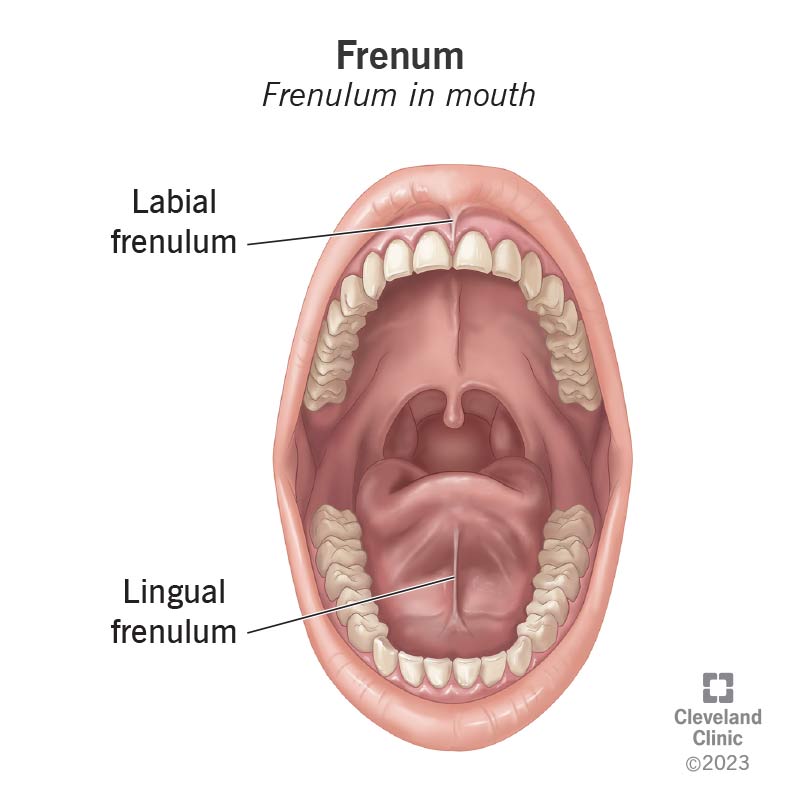
Image content: This image is available to view online.
View image online (https://my.clevelandclinic.org/-/scassets/Images/org/health/articles/frenum)
A frenum (or frenulum) is a thin, ropelike piece of tissue that connects two bodily structures. You have frenums in various areas of your body, like your genitals, digestive tract and brain. You also have them in your mouth — and you might notice them whenever you brush your teeth or smile in front of a mirror.
Advertisement
Cleveland Clinic is a non-profit academic medical center. Advertising on our site helps support our mission. We do not endorse non-Cleveland Clinic products or services. Policy
There are two types of oral frenums:
If a frenum gets irritated or injured, you might develop pain and swelling in the area. This common issue usually goes away on its own.
Some people are born with a frenum that’s too thick or abnormally attached. If a frenum attaches too high or too low, it can interfere with proper function like chewing, speaking and even brushing your teeth.
The main purpose of frenulums in your mouth is to stabilize and provide support for your lips and tongue. Without your frenums, everyday tasks like chewing and speaking would be difficult.
Most people have several oral frenums. The most prominent ones are the:
You also have smaller buccal frenums (“buccal” means “cheek”) going all the way back on both sides of your mouth. They support and give structure to your cheeks and lips.
Advertisement
An oral frenum is a ropelike band of tissue, usually about the same color as your gums. Frenums vary in size — some thin, some thick. They can also be short or long, depending on the person.
Frenums contain elements that make them small but mighty:
Dentists commonly treat these conditions related to frenums:
The conditions listed above can cause a wide array of symptoms, including:
There are two hallmark treatments for most frenum conditions:
Both procedures share the same goal: to stop or reverse any unwanted symptoms of a frenum that’s too short, too thick or abnormally attached.
In some cases, you might need additional procedures. If a frenum causes gum recession, your surgeon may need to remove the frenum and place a gum graft to replace lost tissue.
The best way to keep your frenums healthy is to practice good oral hygiene. Regular brushing and flossing helps reduce harmful bacteria that may cause tissue inflammation.
Remember, though — even diligent hygiene won’t fix a frenum that’s abnormally attached. If you notice frequent symptoms or issues, talk to your dentist. You may benefit from a frenectomy.
A frenum is a band of tissue that connects two bodily structures. A frenulum is simply a small frenum. Most healthcare providers use these terms interchangeably.
Advertisement
Both terms come from the Latin word “frēnulum,” which means “little bridle.”
Chances are, you don’t think about your frenums very often. In fact, if you’ve never had anything wrong with them, you might not recognize the term at all.
Frenums are tiny bands of tissue with big jobs. They help babies breastfeed. They help toddlers learn how to form words. They keep your lips and tongue exactly where they should be, so you can eat, chew and speak without worry.
If you develop a sore or swollen frenum — or if your child has difficulty breastfeeding or speaking — tell your healthcare provider. If a frenum is the culprit, a simple procedure can usually help.
Advertisement



Delivered every Tuesday!
Sign up for our Health Essentials emails for expert guidance on nutrition, fitness, sleep, skin care and more

It's a letter about the news!
Every two weeks once
Sign up for our Health Essentials emails for expert guidance on nutrition, fitness, sleep, skin care and more.

Every day
Sign up for our Health Essentials emails for expert guidance on nutrition, fitness, sleep, skin care and more.
Learn more about the Health Library and our editorial process.
Cleveland Clinic’s health articles are based on evidence-backed information and review by medical professionals to ensure accuracy, reliability and up-to-date clinical standards.
Cleveland Clinic’s health articles are based on evidence-backed information and review by medical professionals to ensure accuracy, reliability and up-to-date clinical standards.